
You can usually feel it before you can properly measure it.
Marketing still looks busy on the surface. Campaigns are going out, content is being published, sales conversations are happening, and everyone is working hard. But underneath all of that activity, something feels off.
Growth slows. Reporting becomes harder to trust. Leads fluctuate unpredictably. Marketing starts reacting to problems instead of driving momentum.
That pressure shows up across industries. For example, a pharma business launches a new product but realises its internal team is stretched too thin to manage strategy, stakeholder communication, digital campaigns, and reporting at the same time.
This is often the point where businesses begin asking bigger questions about marketing itself. Do we need more people? Better strategy? More specialist expertise? Or simply a smarter way of structuring the team?
That is where fractional marketing support starts becoming part of the conversation. Findings from the C-Suite Network revealed that demand for flexible senior marketing leadership has increased by more than 60% over the past five years, particularly among businesses looking for more agile marketing support structures.
What Is Fractional Marketing Support?
Fractional marketing support sits between doing everything internally and hiring a permanent executive team. It gives businesses access to senior strategic thinking, specialist expertise, and hands-on guidance without the long-term overhead of a full-time leadership structure. The model works particularly well when marketing feels reactive, growth becomes inconsistent, or internal teams are stretched too thin to lead strategically.
That could mean bringing in senior outsourced marketing support to help shape strategy, oversee campaigns, improve reporting, or align marketing more closely with commercial goals.
Some businesses bring in fractional marketing services during periods of rapid growth, while others use outsourced marketing services when entering new markets or repositioning the brand. Others bring in flexible marketing support when launching products, entering new markets, or rebuilding positioning after years of relying on ad-hoc marketing.
The model works because businesses can scale support up or down depending on what is happening commercially.
A growing brand, for example, may already have an internal resource managing social media and partnerships, but lack senior strategic marketing guidance around audience segmentation, digital acquisition, or long-term growth planning.
Another example is a business that has strong operational leadership but no clear business marketing strategy connecting local campaigns, loyalty activity, and customer retention across multiple locations.
This is often where outsourced marketing expertise becomes valuable, adding senior capability without forcing businesses into large permanent hiring decisions.
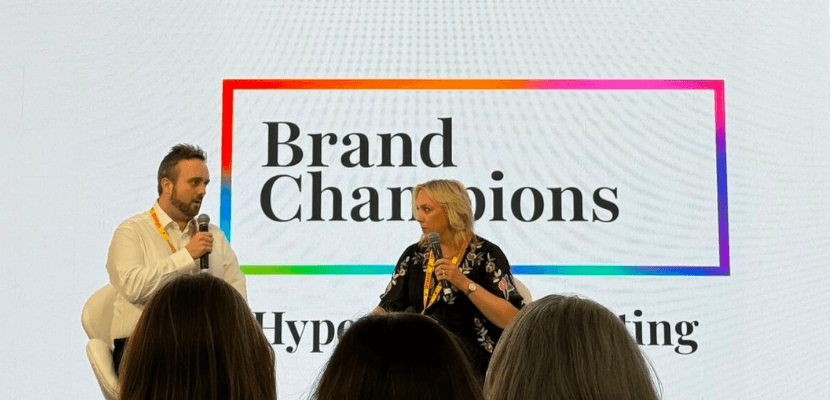
As Fiona Wylie, Founder and CEO of Brand Champions, explains: “Businesses often reach a point where effort is not the problem. Teams are busy, campaigns are running, but marketing has lost strategic focus. Fractional support helps reconnect activity to commercial outcomes.”
Signs Your Marketing Efforts Are Falling Behind
One of the clearest signals is inconsistent marketing results. Activity continues, but outcomes become unpredictable. Website traffic may fluctuate heavily month to month. Leads become harder to convert. Engagement weakens even though content output remains high.
That disconnect creates frustration, especially when strategies that worked previously stop delivering the same results.
Over time, sales teams question lead quality. Leadership struggles to justify advertising spend. Reporting focuses heavily on activity metrics with no correlation to commercial outcomes.
This is also where marketing resource gaps become more visible.
One person may be managing CRM, paid campaigns, content, reporting, and events simultaneously. Agencies may be delivering tactical work, but nobody is pulling strategy together into a coherent plan. This is often one of the clearest signs a business needs stronger outsourced marketing support and clearer strategic ownership.
Not because the business necessarily needs a large marketing department, but because it needs stronger strategic marketing support and clearer ownership around priorities.
Your Business Growth Has Started to Slow
Growth slowdowns often emerge quietly over several quarters. Marketing still generates activity, but momentum weakens. This is where many businesses experience revenue stagnation without immediately recognising the underlying cause.
It becomes easy to blame external market conditions when growth starts slowing, even when the underlying issue is internal.
External factors absolutely matter, but many businesses also reach a point where startup-style marketing stops supporting the next phase of growth. Strategies that worked during early expansion become less effective as markets become more competitive and customer journeys become more fragmented.
This is where data-driven marketing support becomes increasingly important.
Businesses need clearer visibility around:
which channels generate profitable leads
where customers drop out of the funnel
which campaigns influence revenue
how marketing supports long-term customer value
Without that visibility, scaling challenges become harder and harder to diagnose accurately.
As Fiona Wylie puts it: “Businesses don’t always need more marketing when growth slows. Sometimes they need sharper positioning, better alignment, and clearer decision-making around where marketing is actually creating value.”
You Need Strategy Without Full-Time Costs
One of the biggest reasons businesses explore outsourced marketing strategy is simple: senior marketing leadership is expensive.
Hiring a full-time Marketing Director or CMO involves salary, recruitment, onboarding, benefits, operational overhead, and long-term commitment. That makes sense for some businesses, but others need more flexible marketing leadership without a full executive overhead cost.
That tension sits at the centre of the conversation around outsourced marketing support and flexible marketing leadership.
A scaling business may need experienced leadership to improve positioning and lead generation without hiring a full-time executive five days a week. Another may need strategic marketing guidance around launch campaigns, retention, and customer acquisition without building an entirely new internal department.
Fractional marketing bridges these gaps. It gives businesses access to senior-level thinking while keeping the structure lean and commercially flexible.
This is also why many leadership teams exploring outsourced marketing services are not trying to replace their internal teams. They are trying to strengthen them.
Your Team Needs Extra Marketing Support
Internal marketing teams are often carrying more pressure than leadership realises.
An overwhelmed marketing team may still appear productive externally because campaigns continue moving, but internally the strain becomes obvious. Planning becomes reactive. Reporting slips. Teams focus on urgent delivery instead of long-term marketing growth.
This is particularly common in growing businesses where marketing evolves faster than headcount. The pressure often creates marketing resource gaps that generalist teams cannot always absorb sustainably.
Flexible marketing support allows businesses to strengthen specific areas without over-expanding permanently. One business may need strategic marketing support for six months during a product launch. Another may need outsourced marketing support to improve reporting and business marketing optimisation across multiple channels.
The strongest fractional marketing services models work because they scale around actual business need rather than fixed organisational structures.
How Fractional Marketing Support Helps Growth
The benefits of fractional marketing support become clearer once businesses regain visibility and focus.
Marketing becomes easier to prioritise because somebody owns strategic direction. Reporting improves because KPIs connect back to commercial outcomes. Teams stop operating entirely in reactive mode.
That clarity helps businesses make better decisions about where to invest, which channels deserve attention, and which activities are simply creating noise.
Scalable marketing support also allows businesses to adapt more quickly as priorities change.
Harvard Business Review has highlighted how fractional leadership models are helping companies improve agility while accessing senior expertise without the rigidity of traditional executive structures.
A pharma company launching a new treatment area may benefit from strategic marketing guidance during the early growth phase while internal teams continue handling operational delivery.
A restaurant group preparing for expansion may need intensive growth marketing support for six months, then lighter ongoing oversight once the new locations stabilise.
A tourism business entering international markets may need outsourced marketing strategy around audience targeting and partnerships before building larger in-house capability later.
The model works because it creates access to senior expertise without forcing businesses into rigid structures too early.
Marketing problems rarely appear overnight. Momentum slows gradually, reporting becomes harder to trust, and teams spend more time reacting than moving strategically.
That is usually the point where businesses realise they do not necessarily need a bigger team. They need a smarter structure.
Brand Champions helps businesses untangle those gritty marketing challenges, bringing experienced strategic support into the areas where it can create the biggest commercial impact.
What is fractional marketing support?
Fractional marketing support gives businesses access to experienced marketing leadership and specialist expertise on a flexible, part-time basis instead of through full-time permanent hires.
When should a business consider outsourced marketing support?
Businesses experiencing inconsistent marketing results, scaling challenges, marketing resource gaps, or revenue stagnation often benefit from outsourced marketing support that brings additional strategic expertise and capability into the business.
What are the benefits of fractional marketing support?
The benefits of fractional marketing support include flexible access to senior expertise, clearer strategic direction, improved reporting, scalable marketing support, and lower long-term overhead compared to full-time executive hiring.

About the Author
Fiona Wylie
Fiona is an award-winning marketer with over 20 years’ experience working with major brands including British Airways, Nestlé, Clover and Niquitin. As Founder & CEO of Brand Champions, she specialises in brand strategy, marketing leadership and solving complex client challenges. Having worked her way up to Marketing Director before launching Brand Champions, Fiona brings real-world, client-side insight to every article she writes, offering practical, experience-driven perspectives on strategy, capability and building champion brands.


Featured Article


Latest Article