The high street has changed significantly in recent years, but its value has not disappeared. In many ways, the role it plays in our communities has become even more important.
People still want convenience, but they also want familiarity, connection and a sense of belonging. They want to visit places where the team knows their name, remembers their order and understands the community around them.
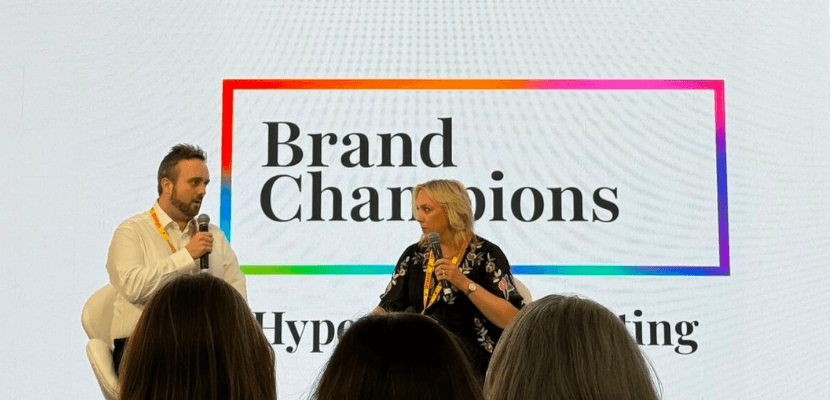
That was the focus of Made with Heart, Won with Coffee: The Human Touch on the High Street, a fireside conversation hosted at MAD//Fest 2026 by Fiona Wylie, Founder and CEO of Brand Champions, and Harry Angers, Local Store Marketing Manager at Costa Coffee.
The conversation explored how national brands can build genuine local relevance, why emotional memory matters as much as immediate footfall, and how Costa Coffee is empowering its stores to become active members of their communities through effective local store marketing.
What does hyperlocal marketing really mean?
Hyperlocal marketing is often discussed as a targeting strategy. In practice, it is about understanding that every location is different.
A store in Edinburgh will not serve exactly the same community as a store in Monmouth, Wrexham or Wimbledon. Each location has its own routines, demographics, local events, partnerships and reasons for visiting.
Internal linking note: Once published, link to the article Hyper Local vs Local Marketing: What Is the Difference? from this section.
As Harry explained:
“For us, hyperlocal isn’t a buzzword, it’s recognising that no two high streets are the same.”
The purpose of local store marketing is therefore not simply to replicate a national campaign at a smaller scale. It is to give individual stores the freedom and support to become part of the places they serve.
This requires local research, conversations with store teams and an understanding of what is already happening within the community.
Fiona highlighted the importance of closing the gap between national perceptions and local reality:
“The gap between what a brand thinks is happening at a local level and what’s actually happening is often enormous.”
Effective hyperlocal marketing starts by listening before creating. Rather than deciding what a community should care about, brands need to learn what people already value and identify where they can contribute meaningfully.
Creating local experiences that people remember
One example discussed during the session was the opening of Costa Coffee’s new store in Wrexham.
Research identified a local running club that had been established to bring runners of different abilities together. Costa supported a five kilometre run that started and finished at the new store, providing drinks, parking and a place for participants to spend time together afterwards.
The activation introduced the new store while supporting an existing community initiative. More importantly, the relationship continued after the launch.
“Since the run they have made our Wrexham store the base for all their runs.”
This is what meaningful local store marketing can achieve. The store did not simply sponsor an event and disappear. It became a useful and valued part of the community’s ongoing routine.
In Edinburgh, Costa was offered the opportunity to advertise before films at a free outdoor cinema event in St Andrew’s Square. Rather than using a generic national advert, the team created content featuring nearby Costa stores.
It was a relatively small change, but it made the campaign feel more relevant to the people watching it.
The lesson is simple. Localisation does not always require a large campaign. Sometimes it is the thoughtful details that make a national brand feel personal.
Why human connection still matters in physical retail
Automation has made everyday transactions faster and easier. Customers can order through apps, use self service screens and complete purchases with very little human interaction.
These developments have clear benefits, but they also make genuine personal connection more distinctive.
Harry explained:
“The stores people love are the ones where the team knows your name, just gets your slightly mad regular order, and hosts local groups.”
These moments create emotional memories. Over time, those memories influence where customers return, which brands they recommend and which stores they feel connected to.
This became particularly visible when Costa Coffee’s recently refurbished Monmouth store was affected by flooding.
Instead of simply closing and waiting for the water to recede, the team created a temporary offer and provided free coffee to people affected by the flooding and to the first responders supporting the community.
When the store was preparing to reopen, Costa worked with Sunshine Radio on a competition inviting members of the public to nominate a local “Comeback Hero”. The campaign recognised ordinary people who had helped others during the flooding and included an outside broadcast from the store.
The activity was not built around a promotional message. It focused on the community and the people who had supported it.
Similar moments happen on a smaller scale across Costa’s stores, from hosting Chatty Café sessions that help to combat loneliness to offering a free coffee to someone having a difficult day.
These are experiences that cannot be recreated through a digital platform.
Balancing technology with humanity
Technology and human connection are not competing ideas. Used well, technology can make personal interactions easier.
Costa Coffee’s app and loyalty programme provide useful information about customer behaviour, including what people order, how often they visit and which offers are most relevant to them.
The aim should not be to make the in store experience feel more automated. Instead, that information should help teams create a more personal experience.
As Harry put it:
“The goal isn’t to replace people with tools. It’s to use the tools well enough that our people can do what they do best.”
There are also limitations to what technology can achieve at a local level.
Digital tools can support national campaigns and broader customer journeys, but they may not always recognise a specific community moment, local partnership or emerging opportunity. This is where local teams and partners continue to play an essential role.
Technology can support relevance, but it cannot manufacture trust, warmth or a genuine sense of belonging.
Local store marketing builds more than footfall
Footfall, transactions and sales will always matter to retailers. However, local store marketing should not be judged solely by its immediate impact.
Costa Coffee’s approach has evolved from a more standardised model towards bespoke local marketing plans. Each plan begins with research into the local area, its customers, their habits and the opportunities available to the store.
That can include local newspapers, radio stations, outdoor advertising, sports clubs, running groups and community events.
In Wimbledon, Costa partnered with Riverside Radio to deliver a live outdoor broadcast during the tennis tournament. The event included competitions and interviews, giving people another reason to stop, participate and visit the store.
The commercial results were significant. Footfall increased by more than 20 per cent compared with the previous week and by 35 per cent compared with two weeks earlier. Net sales increased by more than a quarter week on week, while average customer spend also rose.
The activation worked because it complemented something that was already important to the area.
Harry explained:
“It’s a brilliant example of how leaning into what’s already happening on a high street, rather than working against it, can make a real commercial difference.”
Not every successful local activity will produce such an immediate result. Some build consideration, preference and advocacy gradually.
Those effects may take longer to appear in reporting, but they can have a more lasting influence on customer loyalty.
Authentic community marketing starts with local people
Consumers are increasingly cautious about brands claiming to support communities without demonstrating meaningful involvement.
Authenticity cannot simply be added to a campaign after the strategy has already been decided.
“You can’t fake authenticity, people can see right through that.”
The strongest ideas frequently begin with the people already working in the location. Store teams understand their regular customers, nearby organisations and local opportunities.
For example, Costa’s store on The Cut in Southwark hosted a board games evening in partnership with the Friendship Project. The idea made sense for the space, the local audience and the organisation involved.
Local teams, councils, Business Improvement Districts, community groups and local media should not be viewed only as channels for distributing a campaign. They should help to shape it.
As Harry warned:
“The quickest way to kill community marketing is to parachute something in.”
When a brand decides what a community needs without speaking to the people who live and work there, the result can quickly feel artificial.
Local partners act as a credibility check. Their involvement helps ensure that an activation is useful, relevant and appropriate.
Turning a national campaign into local moments
Costa’s Christmas activity provides a strong example of how a national campaign can be adapted locally.
Building on the national Costa Christmas Catch Up campaign, the local marketing programme focused on moments that brought people together.
Regional operations teams helped to identify relevant opportunities, while Brand Champions worked with councils and local Business Improvement Districts.
The programme eventually supported around 55 events. These included 14 Christmas light switch ons, festive trails in locations including Aberdeen and Bedford, and an ice rink activation in Wimbledon.
Store teams were also given additional sampling support, helping them engage with customers while managing increased demand.
The campaign retained the central national idea, but each activation reflected the location in which it appeared.
This is how national consistency and local relevance can work together. The brand remains recognisable, while the experience feels personal to the community.
Measure whether customers are coming back
Footfall and transaction values remain valuable, but they do not always provide the complete picture.
Changing prices, consumer caution and wider shopping habits can make short term results difficult to interpret. For community focused activity, repeat visits may be a more meaningful measure.
“What I’d encourage people to look at is whether customers are coming back, and whether the store feels embedded in the community or just present in it.”
Brands should also look for signs that a store is becoming part of local life.
Are customers talking about it positively? Is the store being invited to participate in community events? Are local organisations approaching the team with ideas? Are customers choosing the store when several alternatives are available?
These signals can be difficult to capture in a spreadsheet, but they often indicate that trust and relevance are growing.
The sales impact may follow later.
Human interaction is becoming more valuable
The growing use of artificial intelligence and automation has not reduced the value of human interaction. It has increased it.
AI can support research, campaign planning, customer insight and personalisation. It can help brands communicate more efficiently and identify patterns at scale.
What it cannot do is recreate genuine warmth or earn community trust on its own.
“The brands that win will combine intelligent systems with emotionally intelligent people.”
A smart system may improve a label, recommendation or transaction. It is still the barista who remembers a customer’s name, the store team that supports a local group and the brand that shows up during a difficult moment that people remember.
As experiences become more automated, these human moments become more noticeable.
Making national brands feel personal
Costa Coffee is investing in more than 330 new and refurbished store openings during 2026, with many supported by bespoke local marketing plans.
This reflects a wider principle for any national retailer or hospitality brand.
The high street should not be treated solely as a distribution channel. It is a collection of individual communities, each with its own people, challenges, routines and opportunities.
As Fiona concluded during the session:
“Hyperlocalisation isn’t just about targeting. It’s about belonging.”
Before briefing the next local activation, brands should ask whether it is something the local team might have suggested themselves.
When the answer is yes, the idea is more likely to feel credible.
When local knowledge, national strategy and genuine human connection come together, brands can achieve more than a temporary increase in footfall. They can create advocacy, loyalty and emotional memories that continue long after a campaign has ended.
That is what it means to be made with heart and won with coffee.

About the Author
Fiona Wylie
Fiona is an award-winning marketer with over 20 years’ experience working with major brands including British Airways, Nestlé, Clover and Niquitin. As Founder & CEO of Brand Champions, she specialises in brand strategy, marketing leadership and solving complex client challenges. Having worked her way up to Marketing Director before launching Brand Champions, Fiona brings real-world, client-side insight to every article she writes, offering practical, experience-driven perspectives on strategy, capability and building champion brands.

Featured Article


Latest Article
