Local and hyperlocal marketing are often talked about as if they are the same thing. The truth is, they solve different problems.
While both focus on reaching people within a specific geographic area, the scale, tactics and objectives can be very different. A campaign designed to build awareness across an entire city needs a different approach to one targeting people attending a particular event, or spending time in a specific neighbourhood, for example.
And as location-based technologies become more sophisticated, marketers have more opportunities than ever to tailor campaigns to where audiences live, work and visit. Understanding the difference between local and hyperlocal marketing can help businesses choose the right strategy, allocate budget more effectively and create more relevant customer experiences.
What is Hyperlocal vs Local Marketing?
Local marketing focuses on building awareness, visibility and preference across a broader geographic area such as a city, county or region.
So, what is hyperlocal? At its simplest, it is a marketing approach focused on reaching people within a highly specific location, community or moment.
The distinction matters because it shapes how you reach people, what you say to them and what you want them to do next.
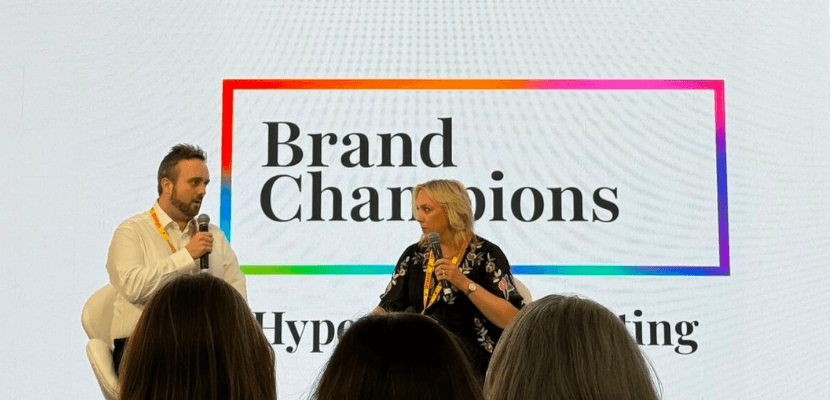
As Fiona Wylie, Founder and CEO of Brand Champions, explains: "The most effective campaigns start with understanding where people are, what matters to them in that moment, and how your brand can add value to that experience. Sometimes that means speaking to an entire city. Sometimes it means focusing on a single community."
Key Differences Between Hyper Local and Local Marketing
The biggest difference in the hyperlocal vs local marketing debate is not geographic radius. It is the outcome you're trying to achieve.
A regional retailer, healthcare provider or professional services firm may want to ensure people throughout a city recognise and trust the brand. In this case, a local advertising strategy helps establish a stronger presence across a city or region.
A hyperlocal marketing strategy, by contrast, focuses on reaching people in a specific place at a specific time. During the UEFA Euro 2020 tournament, Adidas used large-format digital screens at Boxpark Wembley, directly outside Wembley Stadium, as part of its "Impossible is Nothing" campaign. Rather than trying to reach football fans across London, the activation targeted supporters already gathering around the venue before kick-off, when excitement and engagement were at their highest.
Looking at the two approaches side by side makes the difference easier to see:
Factor | Local Marketing | Hyperlocal Marketing |
|---|---|---|
Primary objective | Build awareness, trust and consideration | Drive immediate engagement and action |
Audience mindset | Researching and comparing options | Ready to visit, participate or purchase |
Geographic focus | City, county or region | Specific neighbourhood, venue or defined radius |
Typical tactics | Local SEO, sponsorships, regional social campaigns, PR | Geofencing, proximity marketing, event activations, location-based offers |
Success measures | Brand awareness, reach, share of voice | Footfall, attendance, engagement, conversions |
This is where technologies such as geo targeting marketing, geofencing marketing and proximity marketing become valuable. Rather than targeting everyone in a city, marketers can focus on people most likely to take immediate action. Whether through mobile messaging, digital displays or live brand experiences, the objective is relevance and immediacy. That is what makes hyperlocal advertising so powerful.
Targeting Scope: Hyperlocal vs Local
The distinction is not only geographic. It is behavioural.
People don't just search online anymore. They search based on where they are and what they need in that moment. Research shows that 61% of app users allow location access to enable more personalised experiences, while 67% expect brands to deliver contextual offers based on their current location.
Someone searching for "best accountants in Leeds" is in research mode, comparing providers. Someone searching for "coffee near me" while walking through Soho is most likely looking to make an immediate decision.
Local marketing is often most effective when customers are in the consideration stage. Hyperlocal marketing becomes more valuable when customers are already close to a purchase, visit or interaction.
The targeting scope of local vs hyperlocal marketing influences everything from creative messaging to media spend. City-wide campaigns often focus on awareness, reputation and long-term brand recall. Hyperlocal campaigns tend to focus on local behaviours, moments and experiences that make the message feel more relevant.
For example, a national food brand may run a city-wide awareness campaign across London while simultaneously deploying hyperlocal ads around a summer festival. Using location based marketing, the brand can engage attendees through mobile devices, experiential activations and social content tailored to the event itself.
That's why local SEO and hyperlocal SEO have become so important. People are searching differently, and brands need to show up when those searches happen. It’s not just about being visible but rather, being visible in the right place, at the right time, and in the right context.
Marketing Channels Used in Hyper Local and Local Marketing
Many of the same channels can support both local and hyperlocal marketing. The difference lies in how they are used.
Local marketing typically builds awareness across a broader geographic area through channels such as local SEO marketing, city-level social advertising, sponsorships, community partnerships and regional PR activity.
Hyperlocal marketing uses many of the same foundations but applies them with much more precision. Tactics such as geo targeting marketing, geofencing marketing and location based marketing allow brands to reach audiences within highly defined geographic areas. Hyperlocal advertising can be delivered through paid social, mobile ads, search campaigns and event-based activations.
The difference becomes even clearer when looking at the tactics commonly associated with each approach.
Local Marketing Tactics | Hyperlocal Marketing Tactics |
Local SEO | Geofencing |
Community sponsorships | Sampling and product trials |
Regional PR | Pop-up experiences |
City-wide social campaigns | Queue entertainment |
Strategic partnerships | Venue takeovers |
Community events | Location-triggered offers |
Local media advertising | Event activations |
As Fiona Wylie notes: "The strongest hyperlocal campaigns don't feel like marketing. They feel like part of the community, the event or the experience people are already enjoying."
This is where hyperlocal marketing can be particularly powerful. Rather than simply broadcasting a message, brands can become part of the experience itself through sponsorship activations, pop-up experiences, sampling campaigns and location-based engagement.
The reason these tactics work is simple: they reach people when the message is most relevant. Research shows that UK consumers are twice as likely to engage with mobile advertising that uses location data compared to generic advertising. When messaging aligns with where people are, what they are doing and what they are interested in at that moment, engagement naturally increases.
When to Use Hyperlocal vs Local Marketing
There is no universal right or wrong choice between local and hyperlocal marketing. The most effective approach depends on your audience, objectives and how customers typically engage with your brand.
If your goal is to reach audiences across a larger geographic area, local marketing is often the better fit. If you want to engage people within a specific location, drive attendance, increase footfall or create a more personalised experience, hyperlocal marketing is likely to deliver stronger results.
The table below provides a practical guide to when each approach is most effective.
Scenario | Local Marketing | Hyperlocal Marketing |
Building awareness across a city or region | ✓ Best fit | |
Reaching multiple neighbourhoods or communities | ✓ Best fit | |
Driving attendance to a specific event | ✓ Best fit | |
Promoting a brand activation at a venue | ✓ Best fit | |
Supporting a multi-location business | ✓ Best fit | ✓ At individual locations |
Increasing visibility in local search results | ✓ Local SEO marketing | ✓ Hyperlocal SEO |
Targeting people near a store, venue or event | ✓ Best fit | |
Creating broad community recognition | ✓ Best fit | |
Delivering highly personalised location-based messaging | ✓ Best fit |
The strongest campaigns know when to broaden their reach and when to focus it. A national sponsor of a major sporting event, for example, may use local marketing to build awareness across the host city in the weeks leading up to the event. At the same time, hyperlocal marketing can be used around the venue itself through location-based messaging, activations and experiential campaigns designed to engage attendees on the day.
The two approaches are not competing strategies. They are often most effective when used together at different stages of the customer journey.
Examples of Hyperlocal and Local Marketing
The difference between local and hyperlocal marketing becomes much clearer when you look at how brands apply these approaches in practice.
A strong example of local marketing comes from British Airways. The airline's "A British Original" campaign was designed to connect with audiences across the UK at scale rather than target a specific neighbourhood or venue. The campaign featured more than 500 print, digital and outdoor executions alongside 32 short films celebrating Britain's love of travel.
What made the campaign particularly interesting was its adaptability. Outdoor executions changed according to location, weather, time of day and even current events, ensuring the messaging remained relevant while still supporting a broader national objective. This is local marketing at scale: reaching different communities with messaging that still feels relevant to where they are.
Hyperlocal marketing takes a very different approach.
One of the best-known examples is Nike's "Nothing Beats a Londoner" campaign. Rather than creating a generic national campaign, Nike focused entirely on the culture, language and experiences of young Londoners. The campaign resonated because it reflected the identity of a specific community and celebrated the realities of life in the city. It wasn't simply targeted at London geographically. It felt like it belonged there.
That sense of relevance is what makes hyperlocal marketing so effective. The goal is not necessarily to reach more people. It is to connect more deeply with the right people.
Pizza Pilgrims provides another interesting example. When the founders were growing their business from a pizza van in Soho, they discovered that national influencer marketing delivered little value. What worked was engaging food bloggers and creators who lived and worked nearby. In some cases, the focus was as narrow as a one-mile radius around the venue.
For a business dependent on regular foot traffic and repeat visits, this approach made perfect sense. Rather than spending budget reaching people who were unlikely to visit, Pizza Pilgrims concentrated on the local residents and office workers most likely to become loyal customers. It is a simple but powerful example of hyperlocal targeting aligned to a specific business objective.
Healthcare and pharmaceutical brands are increasingly applying similar principles. One allergy medication campaign combined city-wide digital out-of-home advertising with neighbourhood-level messaging displaying real-time pollen counts. The broader campaign built awareness across metropolitan areas, while hyperlocal digital displays used live environmental data to make the messaging more relevant in specific locations.
The result was a campaign that combined the reach of local marketing with the precision of hyperlocal marketing. Consumers were not only aware of the product but also received information that was immediately relevant to conditions in their area.
Ultimately, the choice between local and hyperlocal marketing isn't about following a trend or choosing one approach over the other. It's about understanding your audience and meeting them where they are.
Sometimes that means building awareness across an entire city. Sometimes it means creating a meaningful interaction at a single venue, event or neighbourhood. The most effective campaigns know when to do each and, increasingly, how to combine both.
If you're planning a campaign and not sure whether a local, hyperlocal or hybrid approach makes the most sense, start with the customer journey. The answer is usually there. If you'd like a fresh perspective, the team at Brand Champions can help you identify the approach that will create the greatest impact.
Is hyperlocal marketing only relevant for businesses with physical locations?
No. While hyperlocal marketing is often associated with retail stores, restaurants and hospitality businesses, it can also be highly effective for sponsorships, events, healthcare providers, tourism campaigns and community initiatives. Any organisation that wants to engage a specific audience in a specific location can benefit from a hyperlocal approach.
How small should a hyperlocal marketing area be?
There is no fixed rule. A hyperlocal campaign might target a neighbourhood, a shopping precinct, a transport hub or even a single event venue. The right size depends on your audience, objectives and how far customers are willing to travel or engage.
Can hyperlocal marketing work for national brands?
Absolutely. Nike's "Nothing Beats a Londoner" campaign is a great example of a national brand using hyperlocal marketing to connect with a specific audience. Large brands often use hyperlocal campaigns to make broader brand messaging feel more relevant to local communities, events and cultural moments.

Featured Article


Latest Article