
AI brand visibility is how often AI assistants mention, cite or recommend your brand when someone asks them a question. It is fast becoming the first filter buyers pass through, and most brands have no plan for it.
By Laura, Assistant Marketing Manager, Brand Champions
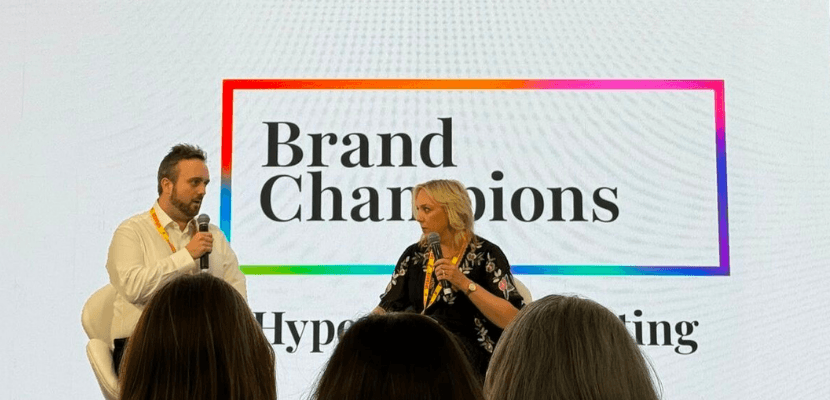
Earlier this month I spent the day at Spotlight, Semrush’s annual conference at Old Billingsgate in London, which this year was given over to a single subject: brand visibility in the age of AI. Semrush billed it as a chance to “spend one day with the leaders rewriting the rules of brand visibility”, and across more than 80 sessions a consistent picture emerged.
Here it is in one line. When someone asks an AI assistant which supplier, product or agency is right for them, the assistant does the searching, pulls the sources together and hands back a shortlist. If your brand is missing from that shortlist, the visit never happens.
What follows is what stood out, and what we think it means for brands planning their marketing for the year ahead.
What AI Brand Visibility Actually Means
Semrush defines it plainly: “AI visibility is how often your brand is mentioned, cited, or recommended in AI-generated responses”. The uncomfortable part is what comes next. In the same guide, Semrush notes that “your brand can rank in position 1 on Google and still be invisible in AI-generated answers”.
That was borne out in the sessions. Strong Google performance matched leadership in AI answers only about half the time. Being big in search does not make you visible in AI.
Most AI Citations Never Name the Brand
The figure that stayed with me longest was 62 per cent. In a study of 3,981 brand appearances across ChatGPT, Google AI Overviews, Gemini and Google AI Mode, Semrush found that “62% were citations where the answer never named the brand”. ChatGPT “cited brands in 87% of its appearances but named them in just 20.7%”.
In other words, your content can be doing the work inside an answer while your name is nowhere in it. Speakers at Spotlight called these ghost citations, and they are a reasonable explanation for why a brand can see referral traffic fall while its material is being read more widely than ever.
AI Thinks in Topics, Not Single Search Terms
A topic, in this context, is a group of related questions and prompts that share an intent and a buyer. Visibility is won at that level rather than term by term, and the opening is unusually wide: figures shared at Spotlight put 85 per cent of ChatGPT topic categories as having no clear brand owner, while 90 per cent of the leaders who do hold a topic kept their lead from one month to the next.
The framework Semrush set out was define, build, measure, hold, with a warning not to move on to the next topic until the lead on the first one is established. For most brands that means choosing fewer subjects and going deeper, which is a planning decision as much as a content one. It is a familiar argument: we have made the same case about narrowing the field in local and hyperlocal marketing.
What Other People Say About You shapes What AI Says About You
Reviews, Reddit threads, LinkedIn posts and trade coverage all feed the answer. Around 85 per cent of AI results carry a citation from a third-party source, so the picture an assistant builds of you is assembled largely from other people’s words. As Semrush puts it, “third-party evidence matters because it can independently support what your brand says”.
This cuts both ways. Semrush has written about what it calls the positioning lag, where “if different sources online describe your business differently, LLMs won’t know which source is correct”, and an old interview or an out-of-date directory entry can keep shaping the answer long after you have moved on. Auditing how you are described elsewhere now belongs with your audience research, not only with PR.
Agents Reward Structure and Evidence
Helena Dillon of Microsoft Advertising described three eras of the web: doing it yourself, asking AI and then doing it yourself, and AI acting on your behalf. In the third, the assistant runs the sub-searches in the background and the buyer sees only the synthesised answer.
Agents work best with structured information: a complete catalogue, clear attributes, sensible metadata. To make the shortlist, a brand needs to set out what a product is for, what it does well and where the trade-offs sit, with credible evidence behind each claim. Vague positioning simply does not survive the summarising.
Where We Would Start
Choose one topic that genuinely matters commercially, note which brands AI names when you ask about it, and repeat the check every month. The movement is the insight.
Read how third-party sources describe you, and correct the ones that are wrong or out of date before writing anything new.
Write for the questions buyers actually ask, including the awkward comparison ones, rather than for the terms that sit neatly in a keyword tool.
Give your key pages clear structure and specifics: what it is for, who it suits, what it costs, where it is weaker.
Agree now what good looks like. Mentions, citations and share of voice are all different measures, and a brand that tracks only one of them will draw the wrong conclusion.
A Closing Thought
The brand basics still decide this. Authenticity, a clear story, real people and consistency across every place you appear. AI is a new layer on top of that work rather than a replacement for it, and the brands that will be recommended are the ones that were already easy to describe.
We are working through what this means for our own clients, and we are happy to talk it through with anyone wrestling with the same questions. If the thinking is clear but the capacity is not, we have written before about when to bring in fractional marketing support and why a marketing team on stand-by works. Our SOS team can step in for a specific project without a long onboarding.
What is AI brand visibility?
It is how often AI assistants such as ChatGPT, Gemini, Perplexity and Google AI Overviews mention, cite or recommend your brand in the answers they give. It is measured through mentions, citations and share of voice on a given topic rather than through rankings.
Is AI visibility the same as SEO?
They overlap but they are not interchangeable. Traditional SEO works at the level of pages and search terms. AI visibility works at the level of topics and sources, and depends heavily on what third-party sites say about you. A brand can do well at one and poorly at the other.
How do I check whether AI mentions my brand?
Start by asking the assistants the questions your buyers would ask, note which brands come back, and record the answers somewhere you can compare them month on month. Dedicated tools make this faster, but the manual version is enough to show you whether you have a problem.

Featured Article

Latest Article